
Natalie Rose Mabry
(she/they)
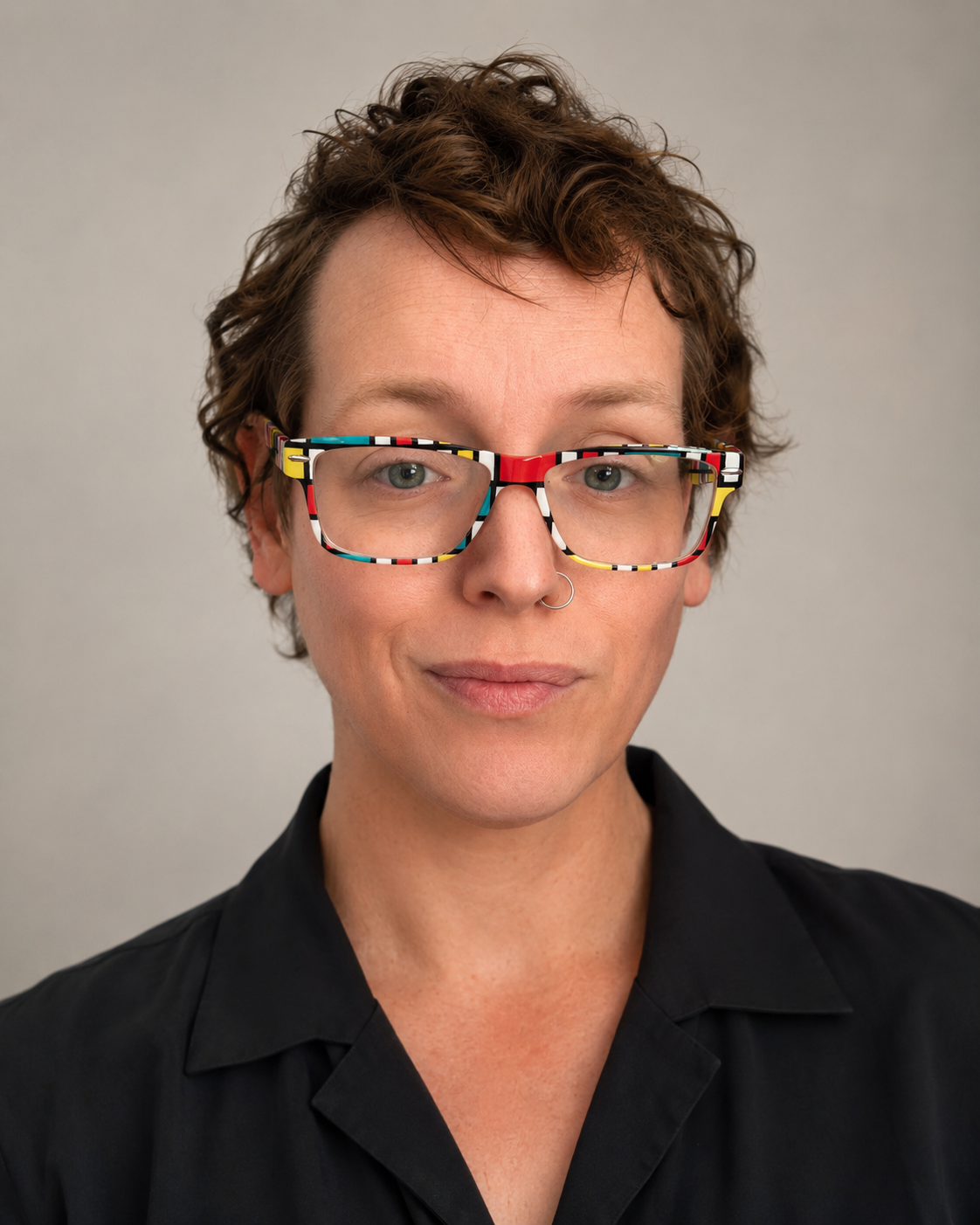
NATALIE ROSE MABRY
M.F.A. in Scenography (Scenic & Video)
Southern Methodist University
B.F.A. in Directing
Hardin-Simmons University
Professional memberships:
-United Scenic Artists (USA829),
-Wingspace Theatrical Design
-USITT
-Theatre Collective Group
Natalie Rose Mabry (they/she) is a trans-queer, neurodivergent scenographer, designer, educator and activist whose work explores how theatrical design can build more equitable, imaginative, and inclusive spaces.
Their practice merges scenic and video design with radical inclusion; designing not just bigger tables, but better ones:
accessible, collaborative, and reflective of the communities they serve.
They design as an act of care and rebellion, blending digital media and handcraft to expand what stages and designers can look like. Their creative research and teaching live at the crossroads of activism and aesthetics, examining how visual design can make empathy tangible and collaboration equitable.
Previous Teaching Opportunities were as Assistant Professor of Scenic Design at Millikin University’s School of Theatre & Dance as well as the Chosky Teaching Artist & Resident Designer at the University of Pittsburgh.
Their national design work includes productions with the Dallas Theater Center, Gulfshore Playhouse, Flat Rock Playhouse, Pittsburgh CLO, Pittsburgh Playhouse, The Public and TheatreSquared, among many other LORT & Community Theatres.
Natalie teaches Scenic Design, Drawing for Design, Props Artisanship, Concepts in Collaboration, and History of Dècor Scenic Painting, Design & Production Seminar and Elements & Principles of Design. Their teaching emphasizes process, collaboration, and interdisciplinary storytelling, empowering emerging designers to develop an authentic artistic voice rooted in both craft and community.
Their pedagogy is rooted in IDEA principles; Inclusion, Diversity, Equity, and Accessibility; treating design as both metaphor and method for constructing a more just creative landscape.
Natalie’s practice lives where activism meets aesthetics, exploring how visual design can make empathy tangible and collaboration equitable. Their creative research asks: What happens when design becomes a form of social architecture?
Their work has been recognized by publications including Broadway World, Burgh Vivant, Dallas Morning News, and FW Weekly and the Theatre Collective Guild.